
What is autism spectrum disorder?
● Autism Spectrum Disorder (ASD) is a neurodevelopmental condition that affects communication, social interactions, and perception of the world. It is characterised by difficulties with social interaction and communication, as well as repetitive behaviours and interests.
● Autism Spectrum Disorder: It is called a “spectrum” because it encompasses a wide range of symptoms and severity levels, indicating that each individual with autism may experience it differently.
● Autism manifests differently in each person, as everyone is unique. Individuals with autism possess their own unique strengths and challenges.
Co-occurring Conditions
It’s important to remember that many individuals with autism may also face additional medical, behavioural, or mental health challenges that can affect their overall quality of life.
Some of the most common conditions that often occur together are:
★ Attention-deficit/hyperactivity disorder (ADHD)★ Anxiety and depression
★ Gastrointestinal (GI) disorders
★ Seizures and sleep disorders
Understanding the Nervous System and Autism.
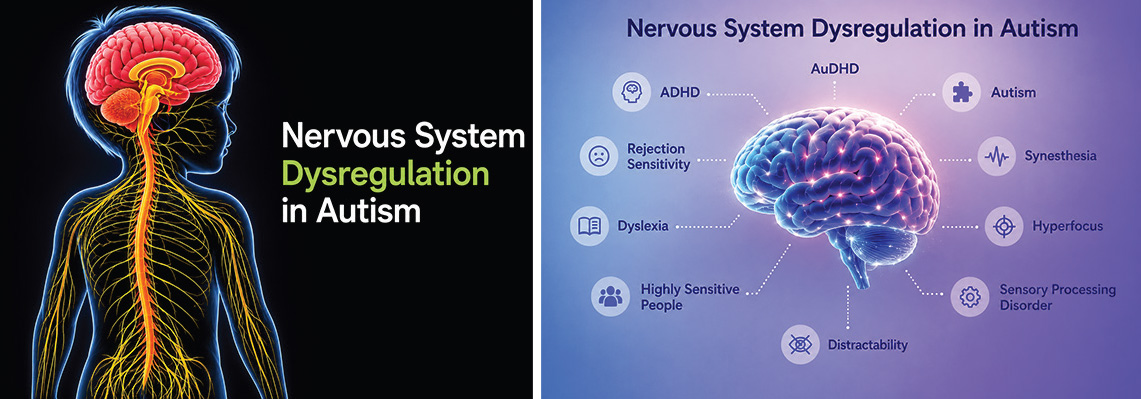
Functions of the Nervous System
- Perceive and understand our environment
- React to external and internal stimuli
- Coordinate physical movements and bodily functions
Types of Nervous System
-
➤ Central Nervous System (CNS): Includes the brain and spinal cord. It processes information and controls most of the body's functions.
- Sympathetic Nervous System: Prepares the body for action (fight or flight response).
- Parasympathetic Nervous System: Helps calm and restore the body after stress or activity.
➤ Peripheral Nervous System (PNS).
The Nervous System in Autism
Autistic individuals may experience unique nervous system responses. Some common traits and behaviours include:Many autistic individuals experience unique ways in which their nervous systems react. You might observe some familiar characteristics and behaviours, such as:
-
Hyperactivity
Repetitive movements such as hand-flapping, spinning, or pacing
Screaming or loud vocalisations
Kicking or running away
Walking on tiptoes
Difficulty sleeping
Fine and gross motor delays (e.g., trouble with handwriting)
Dyspraxia (poor coordination and balance)
Lack of awareness of danger
Difficulty adapting to changes in routine.
Neurological Symptoms in Autistic Children
- Sensation: Difficulty detecting or over-responding to changes in the environment (e.g., touch, sound, or pain).
- Integration: Challenges in processing and interpreting sensory information.
- Response: Delayed or heightened physical reactions (e.g., movement, speech, or emotional responses)
The Autistic Brain
The autistic brain often processes and communicates information differently. These neurological differences contribute to the behaviours commonly linked with autism spectrum disorder (ASD).
Abnormalities in key brain areas
- Prefrontal Cortex:Affects decision-making and social behaviour.
- Amygdala:It plays a vital role in processing emotions, especially fear, anxiety, and social-emotional responses. The amygdala helps us interpret facial expressions, recognise social signals, and regulate emotional reactions.
- Fusiform Face Area (FFA):It plays a crucial role in facial recognition and perception, assisting the brain to identify and interpret faces — such as recognising people, reading facial expressions, and distinguishing emotional cues. Research suggests that the amygdala's function and structure may vary among individuals with autism.
- Although differences are often present early in life, early intervention and therapy can help individuals build skills and adapt.
Digestive System and Autism
Many autistic individuals experience digestive issues due to physiological and sensory processing differences.
What is a Digestive System Disorder?
These disorders affect the normal function of the digestive tract (oesophagus, stomach, intestines, liver, pancreas, and gallbladder) and may cause symptoms such as nausea, vomiting, constipation, diarrhoea, and abdominal pain. Causes include infections, stress, poor diet, genetics, or medical conditions.
Digestive Disorder Symptoms in Autism
- ➤ Abdominal pain and bloating
- ➤ Gas and frequent bloating
- ➤ Overeating or picky eating
- ➤ Nausea or vomiting
- ➤ Constipation or diarrhoea
- ➤ Irritable Bowel Syndrome (IBS)
- ➤ Acid reflux
